Rosy Conversation with Dr. Nadine Macaluso

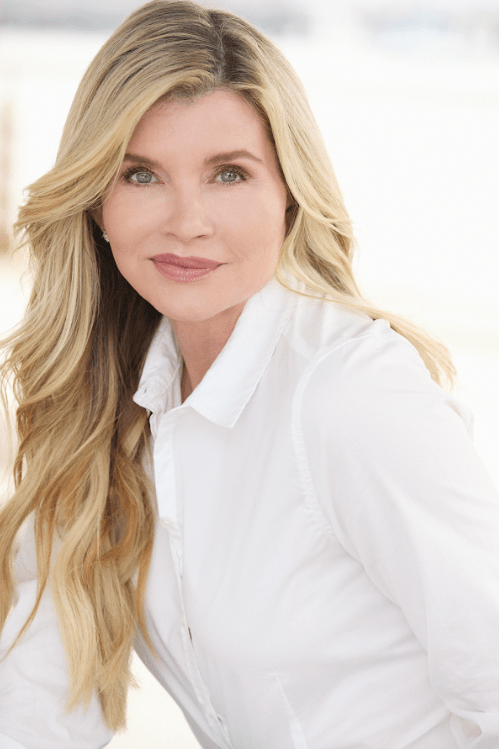
Dr. Nadine Macaluso, known to her patients as Dr. Nae, is the real-life inspiration behind Naomi Belfort’s character in “The Wolf of Wall Street.” She survived a turbulent eight-year marriage to Jordan Belfort, marked by abuse, greed, and trauma.

Following her experiences, Dr. Macaluso relocated to California. Her journey of trauma and healing inspired her to return to school at age 39, where she earned her Master’s in counseling and a Ph.D. in somatic psychotherapy. She further specialized with a two-year postdoctoral training in the Neuro-affective Relational Model (NARM).

As a therapist, Dr. Macaluso combines her education and personal experiences to help others heal from trauma. Her practice focuses on assisting patients in connecting with their authentic selves, fostering confidence, resilience, and agency. Dr. Macaluso firmly believes in the potential for post-traumatic growth, instilling hope in her patients and guiding them to reach their potential in life and love.

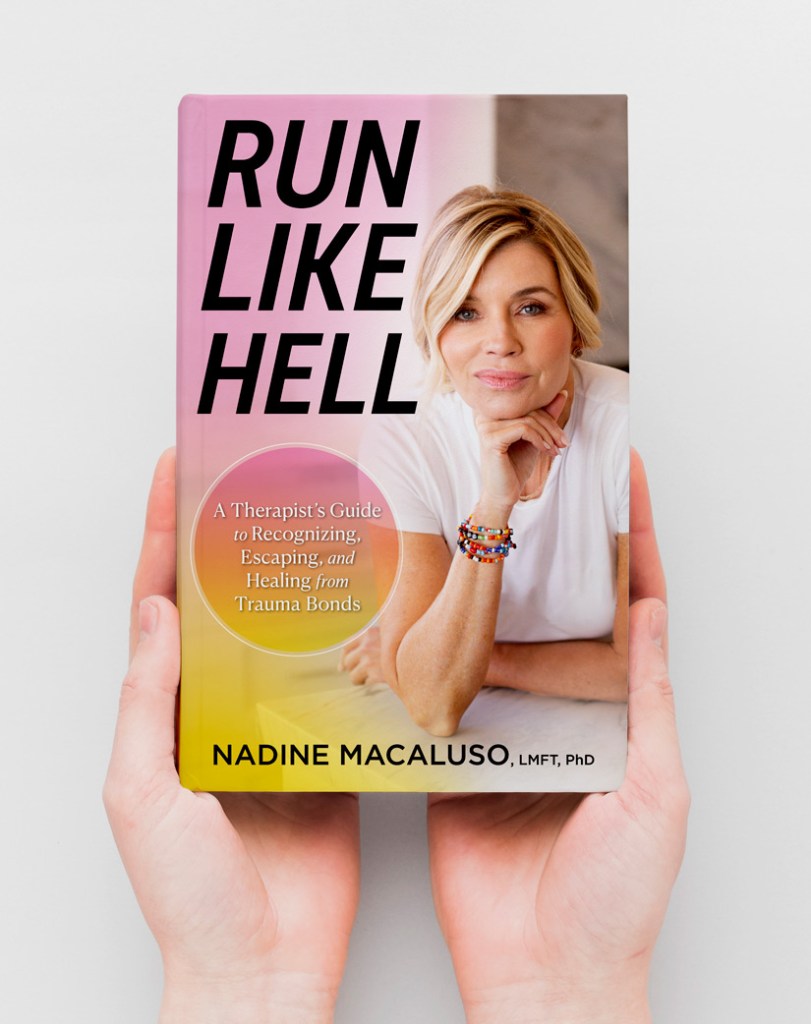
Please follow these links to Dr. Nae’s Trauma Bond Recovery Community as a resource and you can download the first chapter of her book, “Run Like Hell,” for free here

On Trauma Bonds, Healing, and the Journey from Survivor to Surthriver

Advising Margot Robbie for The Wolf of Wall Street

What I most wanted Margot to understand:

I wanted her to understand that beneath the surface glamour, living with abuse and coercive control is a daily battle for survival. It’s not just about the dramatic moments that make it to film – it’s the constant hypervigilance, the walking on eggshells, the way your nervous system rewires itself to anticipate danger. I explained to her that when you’re trauma bonded, you’re simultaneously the person being hurt and the person desperately trying to maintain connection with the source of that hurt. This paradox is what makes these relationships so confusing and difficult to leave.

The abuse isn’t always visible bruises; it’s the systematic erosion of your sense of self, your confidence, and your ability to trust your own perceptions. I wanted viewers to feel that internal struggle – the cognitive dissonance of loving someone who harms you, the way trauma bonds hijack your attachment system and make leaving feel like emotional death.

Communicating “Helpless and Voiceless to Power”

There was a pivotal moment when Margot confided that she was afraid to tell Martin Scorsese she didn’t want to be naked for a scene. I told her, “That feeling you have right now – that fear of speaking truth to power, that worry about the consequences of asserting your boundaries – I felt that every single day in my marriage. Embody that feeling, and you’ll be accurately portraying how I lived.”

This wasn’t just about Jordan’s financial power or his volatile personality. It was about how systematic emotional abuse creates learned helplessness. When someone consistently punishes you for having needs, opinions, or boundaries, you eventually stop expressing them. You become voiceless not because you have nothing to say, but because you’ve learned that speaking carries too high a price. The power dynamic in a trauma bond isn’t just about external control – it’s about how that control becomes internalized until you police yourself more effectively than your abuser ever could.

From Personal Experience to Professional Purpose

The women in my practice were my inspiration to write “Run Like Hell.” Day after day, I sat with women who were trauma bonded, betrayed, and coercively controlled, and I saw my own story reflected in theirs. I realized that while the details differed – not everyone’s abuser made headlines or had movies made about them – the patterns were remarkably consistent. The trauma bond blueprint is universal.

I went back to the research with fresh eyes, combining my lived experience with clinical expertise. I wanted to create the resource I wished I’d had – something that named what was happening, explained why leaving was so hard, and provided a roadmap for healing. The message I most wanted to share is this: You’re not crazy, you’re not weak, and you’re not alone. What you’re experiencing has a name, it has a neurobiological basis, and most importantly, it has a path to healing.

Community as Medicine

My Surthriver Community has been profoundly healing, not just for the members but for me personally. Every day I help a survivor, it adds meaning to my own trauma. It transforms something that was destructive into something generative. When I see women supporting each other, sharing resources, and celebrating each other’s victories – no matter how small – I’m witnessing the antidote to isolation that keeps so many trapped.

Building this community of over 300,000 followers isn’t about numbers; it’s about creating a counter-narrative to the shame and secrecy that surrounds abuse. Every story shared, every comment of support, every woman who recognizes herself in another’s experience chips away at the isolation that trauma bonds depend on. My own healing accelerates when I witness others reclaim their lives – it’s living proof that transformation is possible.

The Epidemic We Must Confront

Intimate partner abuse is indeed a dangerous epidemic leaving a trail of wounded women and children in its wake. The coalitions and awareness efforts we need must be comprehensive and multi-systemic:

•   Legal reform that recognizes coercive control as abuse and provides real protection for survivors

•  Education programs in schools that teach healthy relationship dynamics and help young people recognize early warning signs

Healthcare provider training so medical professionals can identify and appropriately respond to signs of abuse

Workplace policies that support survivors without penalizing them for the chaos abuse brings to their lives

Media literacy that challenges romantic narratives glorifying toxic relationships

Community support networks that provide practical resources – safe housing, legal aid, financial assistance

Trauma-informed therapeutic services that understand the neurobiological impact of abuse

Most critically, we need a cultural shift that stops asking “Why didn’t she leave?” and starts asking “Why did he abuse?” and “What systems enabled this?”

The Body Keeps the Score

Somatic psychology drew me because I recognized that trauma lives in the body, not just the mind. When you’ve been abused, it’s not just the experience itself that needs healing – it’s how that experience imprinted on your nervous system, altered your stress response, and changed your relationship with your own body.

Narcissistic abuse specifically creates a profound disconnection from the body. Survivors often describe feeling like they’re floating outside themselves, watching their life happen. This dissociation is protective in the moment but becomes problematic when the danger has passed. Somatic work helps survivors reconnect with their bodies as sources of wisdom rather than sites of betrayal.

The body remembers everything – it holds our trauma, but it also holds our capacity for healing. Through somatic practices, we can literally rewire our nervous systems, moving from chronic hypervigilance to regulated presence. This isn’t just emotional healing; it’s neurobiological restoration.

Finding Your Path to Healing

The magic of my online community lies in the validation women provide each other. When you’ve been gaslit and isolated, hearing someone else describe your exact experience is revolutionary. It’s the moment you realize you’re not crazy – the situation was crazy. The shame begins to lift when you understand that what happened to you is part of a larger pattern, not a personal failing.

Through my book “Run Like Hell” and the Surthriver Community, women can:

• Learn to identify trauma bond patterns and understand the neuroscience behind why they’re so hard to break

• Access practical tools for managing trauma symptoms and regulating their nervous systems

• Connect with others who truly understand the complexity of loving someone who harms you

• Work through the “12 Steps to Heal from Your Trauma Bond” framework

• Transform from survivor to surthriver – someone who doesn’t just survive but creates a life of meaning and purpose

The journey begins with that first moment of recognition – when you see your story in someone else’s words and realize you’re not alone.

Healing as a Lifelong Practice

Healing is absolutely a lifelong practice, not a destination you arrive at and unpack forever. But within that practice, there are plateaus – moments of integration where you realize how far you’ve come. These plateaus give you hope and energy for the next phase of growth.

I think of healing as an upward spiral. You might revisit similar themes – trust, boundaries, self-worth – but each time you’re approaching them from a higher vantage point with more resources and wisdom. What triggered you into a week-long collapse five years ago might only cause a few hours of dysregulation today. That’s not failure; that’s progress.

Healing also isn’t linear. Some days you’ll feel like you’ve gone backwards, but you can’t unlearn what you’ve learned. Every setback is an opportunity to practice your tools with more complexity. And eventually, your healing becomes generative – it spills over to your children, your community, and other survivors who need to see that transformation is possible.

The goal isn’t to forget what happened or pretend it didn’t affect you. The goal is integration – to make meaning from your suffering and use it as compost for new growth. That’s what it means to be a surthriver: to take the worst thing that happened to you and transform it into purpose, connection, and a fierce commitment to breaking the cycle.

About Dr. Nadine Macaluso

Dr. Nadine Macaluso is a licensed marriage and family therapist, author of “Run Like Hell: A Therapist’s Guide to Recognizing, Escaping, and Healing from Trauma Bonds,” and founder of the Surthriver Community. Her personal story of survival and transformation was portrayed by Margot Robbie in the Oscar nominated Martin Scorsese film, “The Wolf of Wall Street.”

Thank you, Dr. Nae! Your book and insights are a truly rosy contribution to Rosy BVM!

Bianca’s Holiday Gift Guide 2025: Gifts To Elevate Everyday

Holiday shopping can be intentional, and joyful, when the gifts we choose are rooted in supporting our healthy lifestyles, personal growth, and overall wellbeing, this helps put more focus on our ability to experience life more fully. Forward-thinking gifting is not about volume… it’s about resonance. These gifts fit seamlessly into everyday life for both men and women, meeting them exactly where they are today while supporting who they’re growing into tomorrow.

1. Bose Ultra Open Earbuds (For Him & Her)

For the one who multitasks, commutes, stays in motion. These are so perfect for those who don’t want to be closed off from their environment yet still want incredible audio quality. Futuristic, discreet, executive energy. And wildly comfortable for all-day wear… A great gift for your high performing friend that wants to do more while feeling good doing it.

2. FitBit Inspire 3 (For Him & Her)

Small habit tracking = compounding wellness. This is the gift of meaningful data… which becomes the gift of empowered choice. Sleep, movement, heart rate, you’ll be able to understand herself in a deeply practical way. A great gift for those who want to start 2026 feeling organized and in alignment. And frankly, it’s good for your overall to track meaningful data points… for example, being reminded to move throughout the day is one of its best features!

3. Kendra Scott Jewelry (For Her)

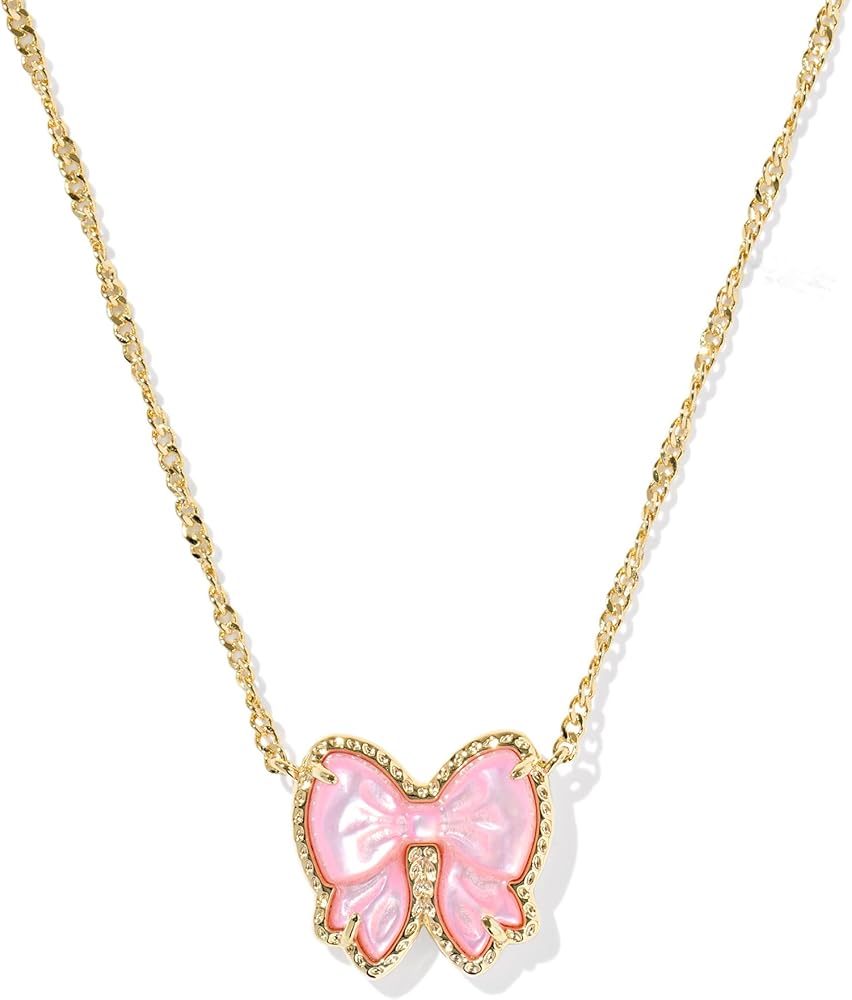
Playful, feminine, pretty… and adorable collaboration with LoveShackFancy. Her collections are timeless and modern at the same time, and most importantly, affordable… which makes this such a great “I want you to feel beautiful for being you” gift. You can lean classic or trending, depending who you are gifting for. The Elisa pendant necklace is her signature item and the necklace comes in many colors (you truly cannot go wrong).

More recently, the brand has come out with “hobby” style pendants with little icons of sports or little symbols that might represent something meaningful to you, which I think is endearing. My personal favorite is the “Haley” bow collection. It’s dainty, it’s versatile, and it has a whimsical flair to it that reminds us to stay playful. Her collections with the Dallas Cowboys, Dolly Parton, and Disney are all worth checking out as well. Additionally, she released a limited edition pair of Bose Ultra Open Earbuds, so you can match your jewelry with your headphones!

4. Dearfoams Slippers (For Him & Her)

Designed with both comfort and style in mind, Dearfoams slippers for him and her deliver a matching experience of warmth, softness, and everyday ease. From plush linings to supportive soles, these pairs make home feel even homier… perfect for couples or family who love cozy moments and shared comfort. They are always available at Costco!

5. Baggallini Bags (For Him & Her)

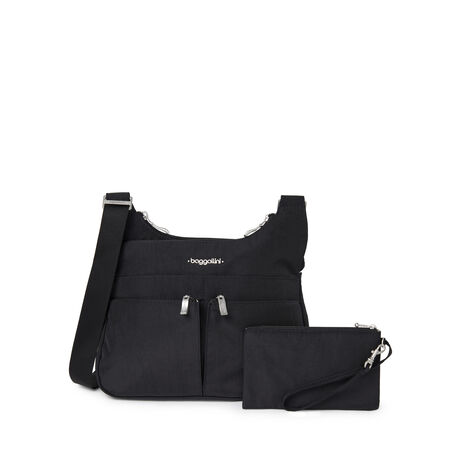
What I especially love about Baggallini is its unisex versatility. Many styles are neutral in shape and function — crossbody bags, backpacks, travel totes — and look equally good on a woman or a man, depending on color and how they’re carried.

For couples: you might pick matching or complementary colors/styles so each person gets a bag suited to their daily life — hers perhaps a refined crossbody or sleek tote, his maybe a slightly larger backpack.

Because of their thoughtful design (lightweight, organized, water-resistant, travel-ready) they make amazing gifts for anyone with a busy schedule — commuting, errands, travel, or everyday life, there is a piece in the collection that will exactly suit your needs. Costco also will be a great place to find these!

6. Benefit’s Benetint (For Her)

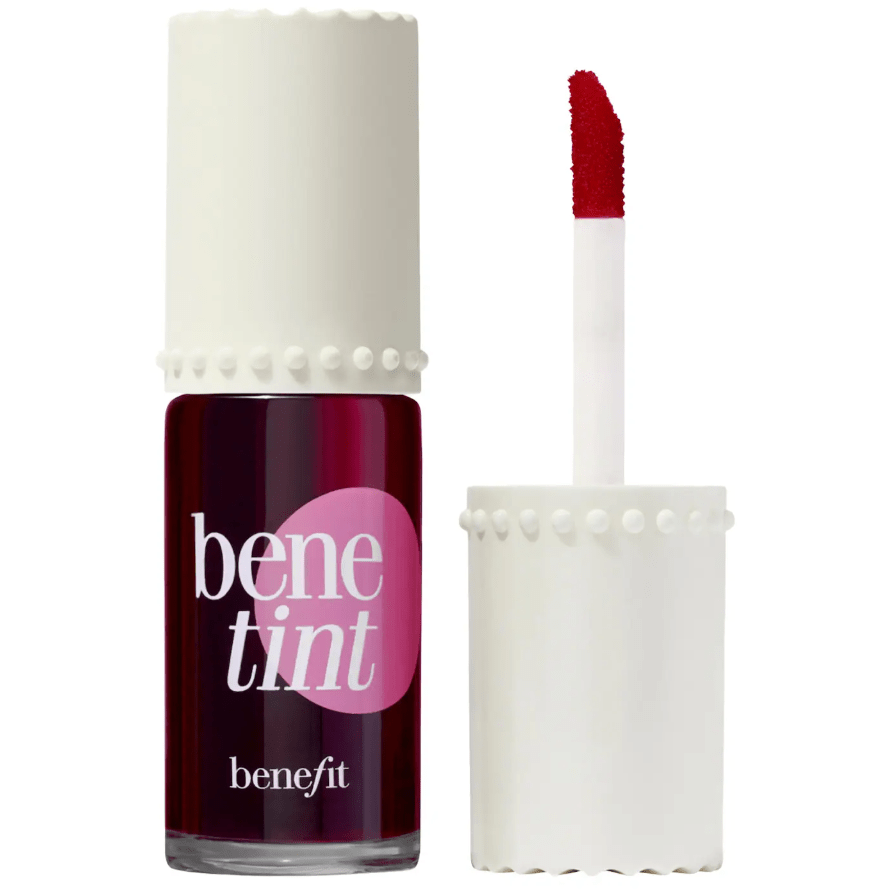
This one is iconic. It is soft, romantic, universally flattering, and a San Francisco staple. It was developed with the idea of rose petals in San Francisco in the Mission District in 1976… a truly rosy gift! It has the perfect stocking stuffer energy, and one of the few beauty products that legitimately looks good across many different skin tones and makeup styles. Benetint is also perfect for the girl who doesn’t want to look overly made up, she just wants to look like the most beautiful version of herself.

7. Personalized 2026 Planner (For Her)

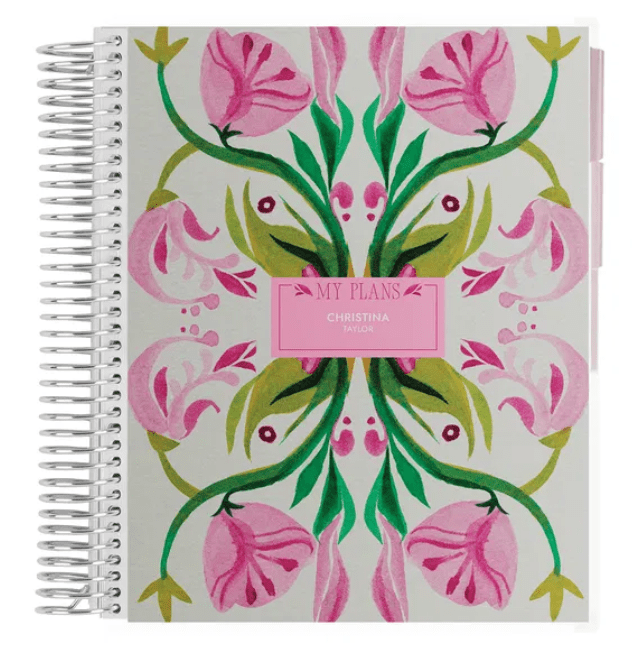
A planner isn’t just functional: it becomes a ritual, a place where to map goals, dreams, schedule, and reflections. A premium brand like Erin Condren gets consistent praise for quality for good reason. Reviews highlight their thick paper, durable binding, elegant customizable covers and layouts that feel joyful to use, and the LifePlanner also comes in a softbound version as well.

The A5 Softbound LifePlanner is perfect to take on the go with you! Additionally, the personalization (your name on the cover, choice of cover design, layout style) makes it feel special, a personalized gift for the entire year to come rather than a generic one. A good planner is rooted in traditional organizing wisdom, but customizable to modern life. The best part is that you can think about how you want to fill the interior of the planner. My favorite writing tool is the Sharpie S-Gel pen, which pairs great on this planner’s paper stock.

Oliver Heldens, HI-LO, and Techno’s Mystique

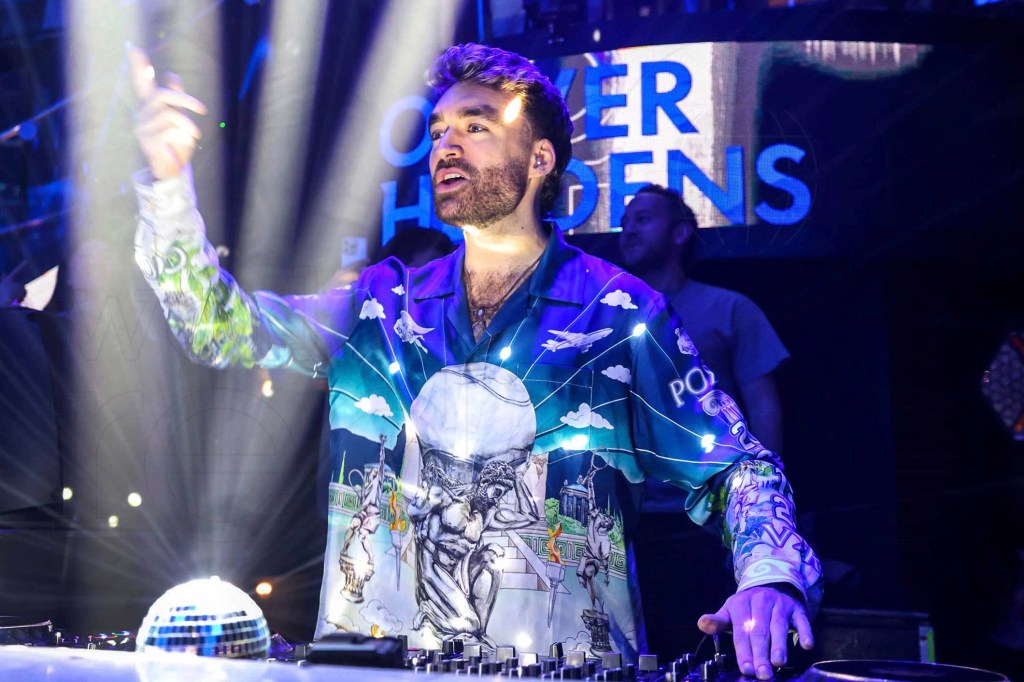
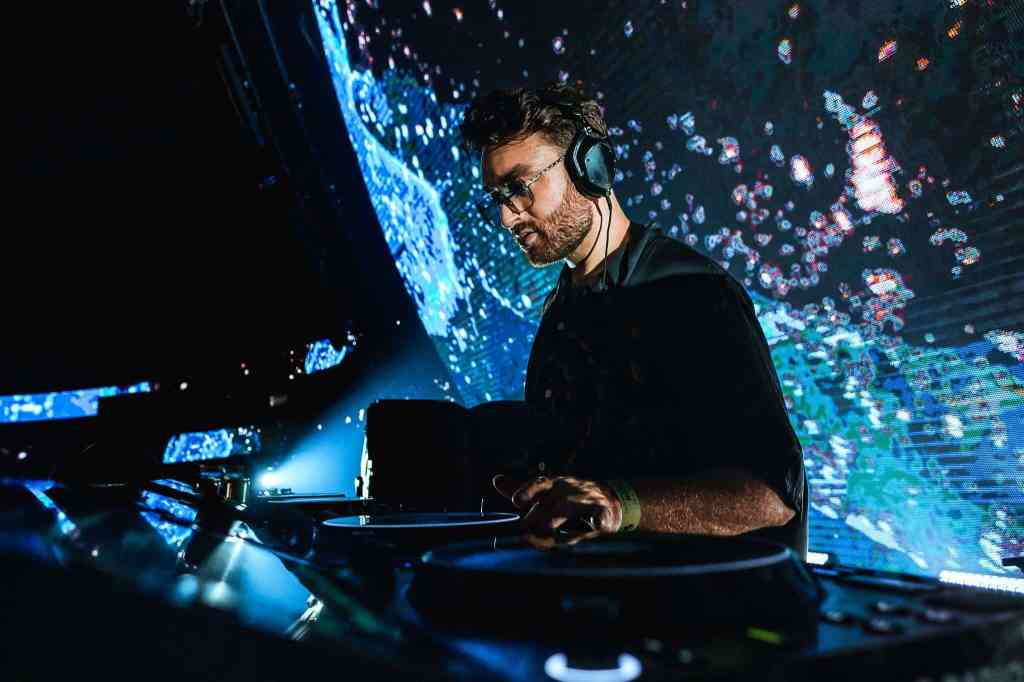
If my “Spotify Wrapped” were to be only one artist these past couple of years, it most certainly would be Oliver Heldens. The Dutch DJ has been streamed over a billion times on Spotify with good reason. People can listen to his music for hours at a time at music festivals with good reason as well. His unique and immersive sounds sit at a fascinating intersection between the mainstream EDM and house music sounds that many people enjoy at electronic dance festivals like EDC in Las Vegas or Tomorrowland in Belgium because of his future forward techno sounds. While he is known as a mainstream DJ, he is also known for a darker techno style of music that feels grittier and more underground in its beats, which he has a separate performance name for as “HI-LO.” I think this darker flavor of techno is the evolution of techno sound at its finest and much of his contemporary sounds and beats are likely originating from this unique sound base that he draws upon (with an additional understanding of the history of techno). The “Godfather of Techno” is undoubtedly Detroit’s Juan Atkins. Atkins is known for pioneering the earliest sounds of techno in nightclubs in Detroit.

Interestingly, Atkins’ father was a concert promoter, so the emergence of techno sound is one which sits at the intersection of dystopian science fiction brought together with mainstream exposure to the music industry, similar to Oliver Heldens and his mainstream versus HI-LO musical styles. This is where innovation sits – understanding where we are and creating something unique and new. Heldens is paving the way similarly to how Atkins carved out techno as a genre. Atkins specifically drew upon science fiction for creating the aesthetic ideas around techno music. One of my all-time favorite English courses in college was the history of Science Fiction as a genre. The genre as a storyline concept is highly underrated, to the extent that it often gets over simplified to ideas solely rooted in “Star Wars” or “Star Trek,” where the genre is actually quite expansive and makes social commentary on the contemporary reality of merging together mankind with technology and machinery.

Something deeply fascinating about Heldens music is that there is something which will likely appeal to most audiences. He has the mainstream “beats” which are going to be popular within any nightclub atmosphere (or candidly, it can even be the music used preceding a corporate event or meeting… it truly has a non-offensive sound quality to it and can be adaptable to its use case). However, the styling of HI-LO, his darker music is the one which fascinates me more: he merges together sounds and songs which are unique and he will bring together a very classic techno beat with a cultural song or sound, one that is deeply classical. For example, he has brought together the sounds of Mozart and turned it into an echo chamber of techno sound that resonates with listeners of EDM, where ultimately the new beat merged together with the original classical song enables the brain to focus back onto the classical song, somehow enhancing its original sound quality and turning it into something new and different.

I believe Oliver Heldens is the best DJ of our time for the reason that he is never stuck in one sound style – he is constantly pushing his own limits and this is especially exemplified through HI-LO. However, the qualities of sound he creates is a combination of talent, passion, skill and an understanding of where techno as a music genre has been, where techno is going, and what is also utterly timeless. Ultimately, techno as a genre and Oliver Heldens style is going to move in the direction of his individual passion for the music which is clearly based in how he loves what he does. Heldens is certainly carving forward the path for where the techno landscape is going. As a listener, you can sense that Heldens is performing out of genuine enjoyment for the musical talents he has to share. Hopefully, the continuation of his music career is rooted in this: a passion lit from within and shared as a gift for others. He is considered a pioneer of “future house” music because of his unique blend of electro house sounds. He releases a weekly track set called “Heldeep Radio” – be sure to his evolving talents each week!

✨ A Tale of Two Vanities: Inside the Worlds of Princess Ariel and Ursula/Vanessa ✨

There’s something enchanting about a woman’s vanity. It’s more than just a surface, it’s a sacred space. A reflection of her desires, her rituals, her magic. And in the “kingdom under the sea,” few vanities are as iconic or contrasting as those of Princess Ariel and Ursula, the Sea Witch (and her glam alter ego, Vanessa).

As someone who treasures beauty as both an art form and a personal ritual, I recreated both vanities using real items from my collection, and the results are as dramatically different as the characters themselves. Whether you resonate more with Ariel’s innocence or Ursula’s unapologetic glamour, one thing is clear: both are expressions of feminine power.

🐚 Princess Ariel’s Vanity: A Dreamer’s Garden Beneath the Waves

Ariel’s vanity would feel like stepping into the softest chapter of a fairytale. Surrounded by sunlight shimmering through ocean currents, the entire space would glow in iridescent pinks, soft seashells, and trinkets collected from her adventures. Think delicate, romantic, and overflowing with heart.

On Ariel’s Vanity:

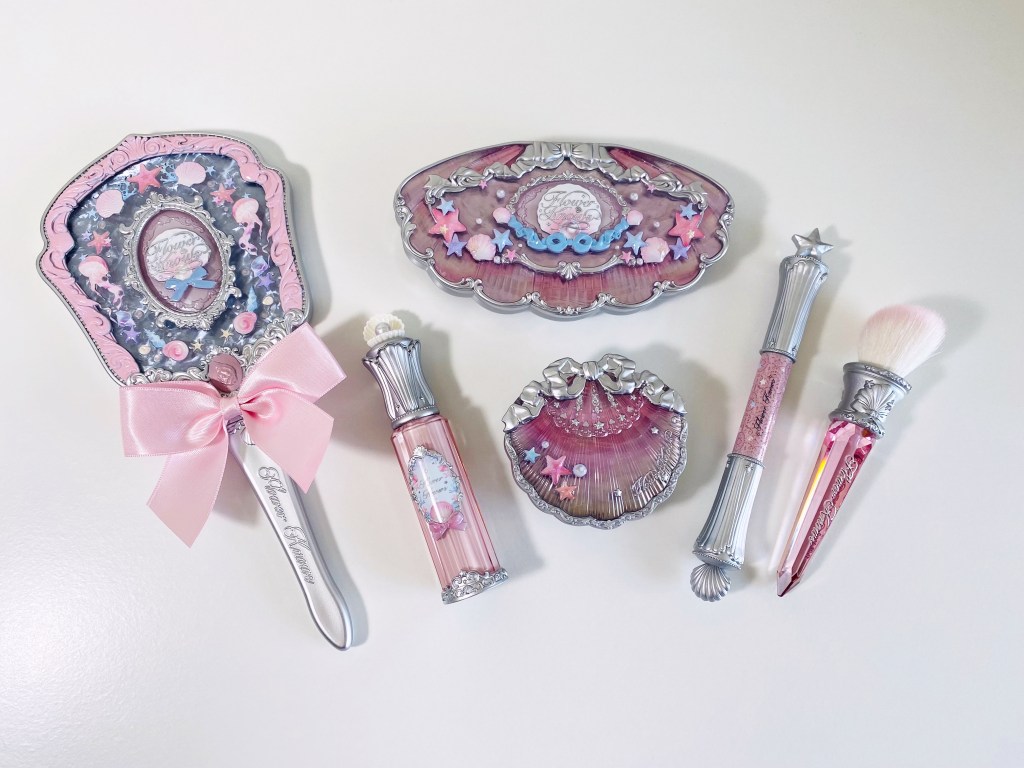
  • 🌸 Flower Knows “Shell’s Jewel” Collection in Pink
    Imagine compacts shaped like clamshells, blushes in the softest corals, and lip glosses that feel kissed by sea foam. This line captures Ariel’s softness, whimsy, and love for all things beautiful and rare.
  • 🌿 Faux sea grass accents & pearl-encrusted details
    Use small touches like shell dishes and pearl hair clips to evoke the atmosphere of her grotto… a place where everyday items are turned into treasures.
  • Delicate perfumes and translucent shimmer powders
    Ariel wouldn’t want heavy scents. I imagine she’d love light florals or watery notes that mimic a breeze across the water.
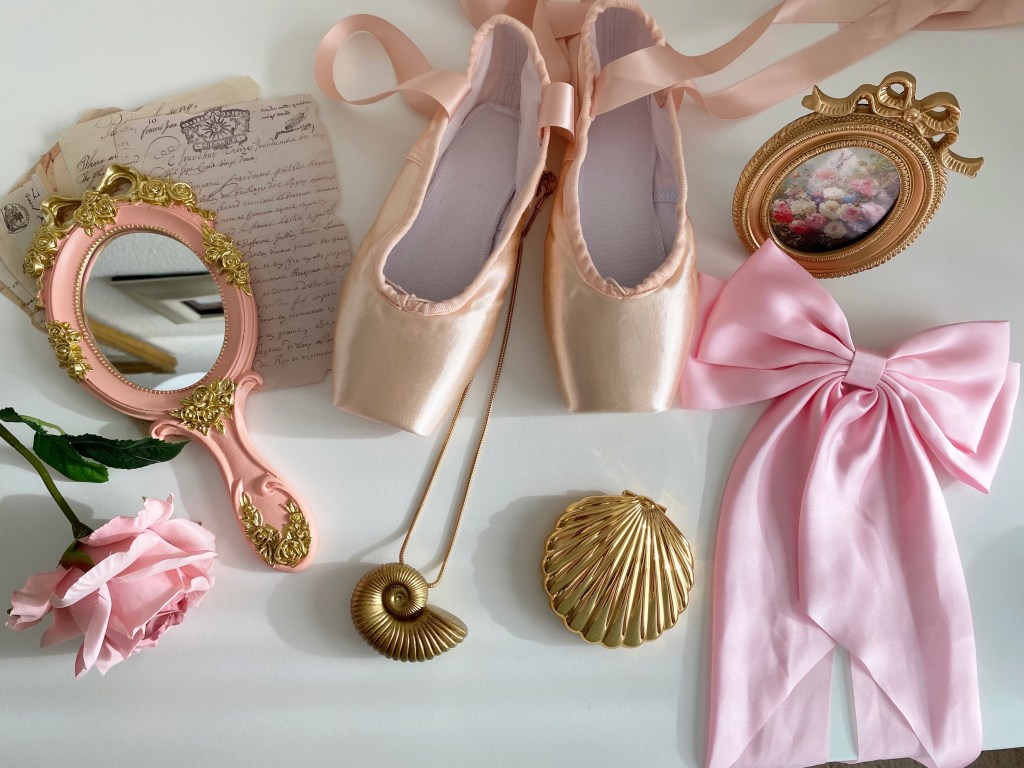
  • 🪞 A soft pink mirror and pastel hairbrush
    She may call it a “dinglehopper,” but her brush is definitely part of the ritual. This is a place where Ariel prepares not just to be seen, but to feel like the best version of her evolving self.

The Vibe:
Ariel’s vanity is soft, youthful, and full of promise. Every item tells a story. It’s where she gets ready to explore a world bigger than she’s ever known, and perhaps even where she learns that beauty is just another form of bravery.

🖤 Ursula/Vanessa’s Vanity: A Stage for Power and Seduction

Now step into darker waters. Ursula’s vanity isn’t about sweetness, it’s about spell work. When she becomes Vanessa, her entire beauty game transforms into a masterclass in confidence and allure. Every item on her vanity is curated, intentional, and undeniably dramatic.

On Ursula/Vanessa’s Vanity:

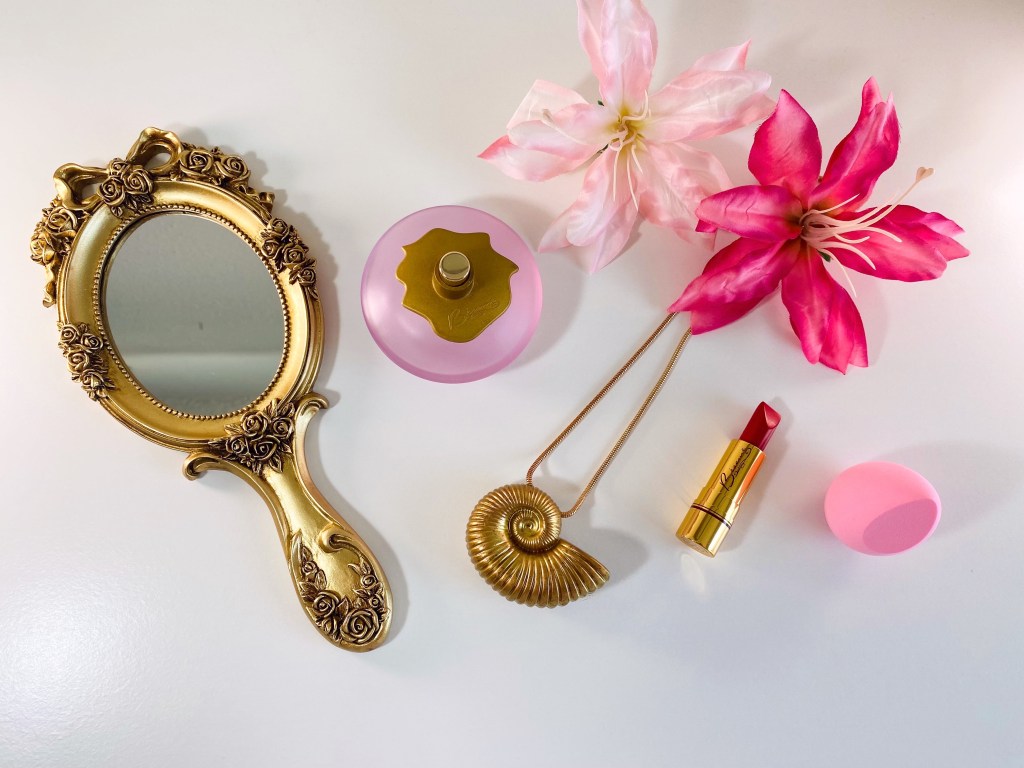
  • 💗 The Nautilus Necklace
    This infamous piece doesn’t just hang — it radiates. I styled it as a centerpiece, echoing its power to hold Ariel’s voice and command attention. It’s more than jewelry; it’s a symbol of Ursula’s belief that true power is not given, it is claimed.
  • 🧴 Vintage Besame Perfume
    Nothing says timeless seduction like a rich, vintage scent. Vanessa wouldn’t spritz, she would dab behind her ears with precision. Her scent would linger in a room long after she’s left it.
  • A Gilded Gold Mirror
    Sleek, antique, and undeniably regal. This mirror reflects not just her beauty but her calculation. She studies the world through it. Her makeup is drama-forward: vampy lips, bold eyes, sculpted cheeks.
  • 💄 Deep plum lipsticks, smoky eyes, and perfumes in black glass bottles
    These items evoke the enchantress archetype — sensual, confident, and always in control. There is no hesitation in her ritual. Every swipe of color is a declaration: I own the room.

The Vibe:
Ursula’s vanity is sensual, commanding, and luxurious with an edge. It’s where magic meets glamour, and where softness is replaced with sultry strategy. Vanessa doesn’t hope to be seen, she orchestrates it. To craft your own vanity spaces, which are not solely focused on the beauty products you might use, get creative with your treasures and how you place them! The idea is that you evoke what you know gives you joy.


🪞 Vanity as a Mirror of Identity

What I love most about comparing these vanity concepts is how they speak to two very real sides of womanhood. There’s the tender young woman who dreams and collects pieces of her future self… and the formidable woman who has learned how to wield her voice.

Some Days, I’m Ariel.
I want softness, sweetness, and a glowing blush that makes me feel like a daydream. I want to surround myself with the comfort of pretty things and gentle rituals.

Other Days, I’m Vanessa.
I want a perfume that leaves a trail, a red lip that speaks boldly, and the confidence to say exactly what I mean… or nothing at all.

And you know what? Both are beautiful. Both are real. And both deserve a place at your vanity.


  • 💖 Which vanity speaks to you today? Are you Ariel, Vanessa, or a little bit of both?

#VanityDiaries #FlowerKnows #BesameBeauty #ArielVsUrsula #HyperfeminineVibes #VintageBeautyRevival #SeaWitchGlam

How To Embrace Y2K Fashion With A Modern Twist

There was a time when velour tracksuits turned sidewalks into runways, especially in Los Angeles, and bedazzled flip phones were the most prized accessories. If you’re like me, you remember it well, the era of pop princesses, playful maximalism, and a fearless approach to fashion. And now? The early 2000s are back in a big way.

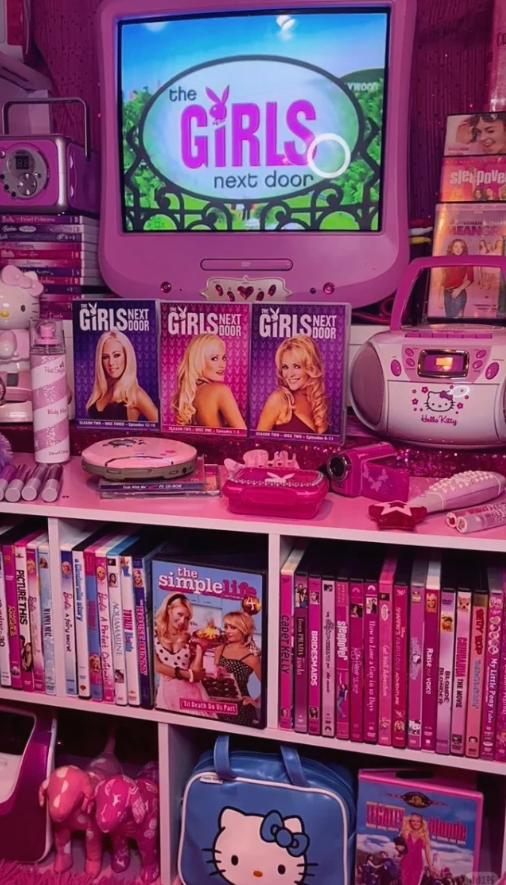
Let’s be honest: while the Y2K revival is undeniably fun, no one wants to walk around looking like they’re headed to a theme party… The key is to channel the essence of the era while keeping your style polished and personal. Here’s how to bring back the magic of early 2000s fashion… without looking like you are wearing a costume. I think the subtle nods to the era are most important – it’s not about the all-out Juicy Couture velour tracksuit anymore. For me, I find the styles presented on the E! show, The Girls Next Door, as a starting point for this fashion era, especially when it comes to Holly’s signature knee high socks. You can take elements of the time and make them uniquely yours and upgraded for 2025.

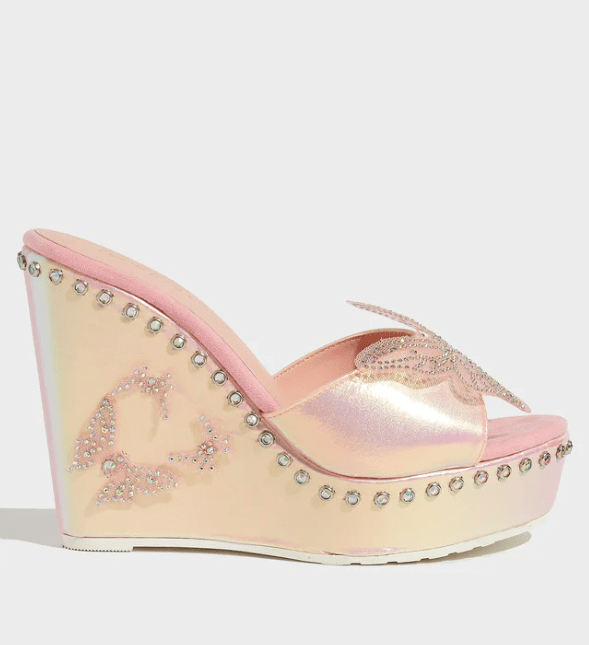
The Bianca wedge by Sparkl Fairy Couture

💖 Why We’re Still Craving Y2K Magic

The early 2000s were about more than just clothes. That era captured a youthful sense of rebellion and fun, wrapped in rhinestones and topped with a trucker hat. Y2K fashion gave us permission to be bold, sparkly, and unapologetically ourselves.

Maybe that’s why it’s making such a powerful comeback… In a world that can feel overwhelming, nostalgic fashion offers comfort. It reminds us of a time when style was playful, expressive, and feeling fabulous.


💼 The Key Pieces Making a Comeback (and How to Style Them Now)

Baby Tees
These tiny tops are perfect under slouchy suits or high-waisted pants. Choose soft pastels, graphic prints, or classic white for a timeless Y2K nod.

Mini Bags
More aesthetic than functional, the mini bag is your moment to shine. Go metallic or glittery if you want to lean in. Otherwise, try classic leather in bright colors to add a pop to your look. Also, the BAGGU trend is having a moment, which means you can lean into that and maximize the amount of items you can fit into one of those bags. There are plenty of small bags now that have plenty of room – it’s quite magical.

Velour Tracksuits
Juicy Couture made them iconic. Today, pair yours with sleek sneakers, gold hoops, and a clean bun for a look that’s cozy and curated (without the Juicy logo emblazoned loudly).

Platform Sandals or Kitten Heels
These add instant throwback glam. Match them with modern slip dresses or wide-leg trousers to keep the look intentional. Find them in pink or black to have a real Y2K moment for yourself.


📸 Iconic Inspirations from the Era

Pull out the digital scrapbook: early 2000s icons are our muses. Paris Hilton in her rhinestone glory. Destiny’s Child in coordinated denim. Brandy in bold accessories. Gwen Stefani in crop tops and cargo pants. Britney Spears—need we say more?

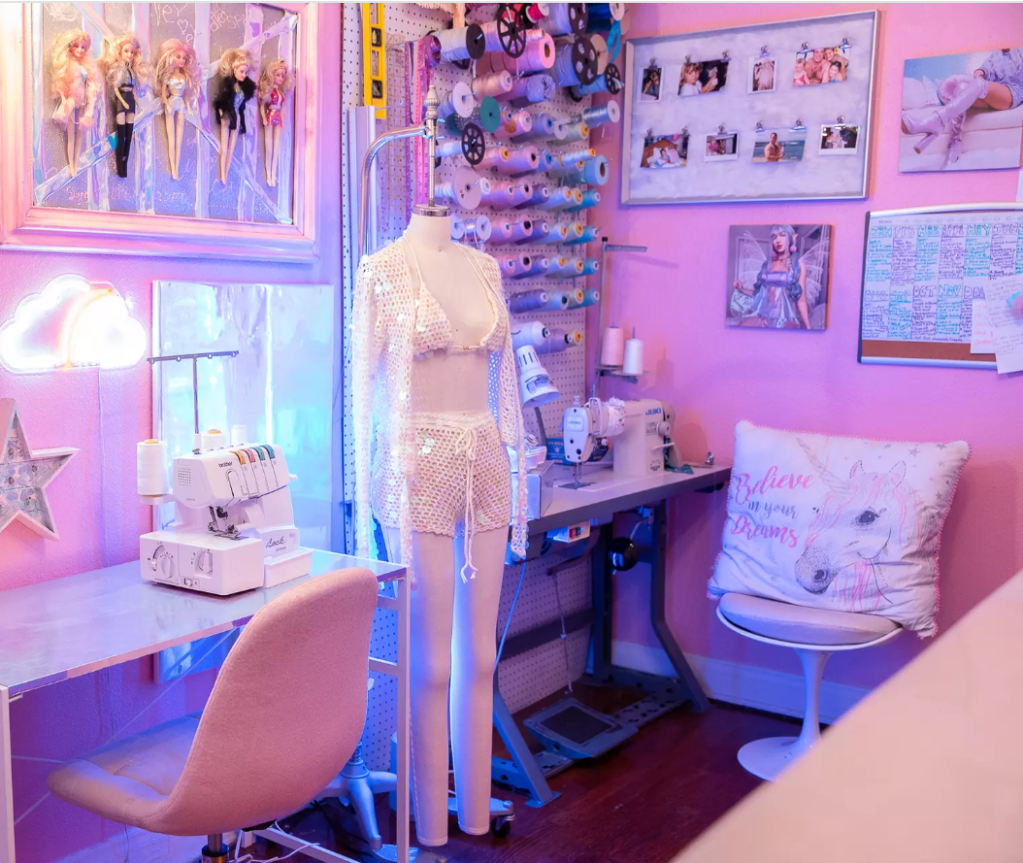
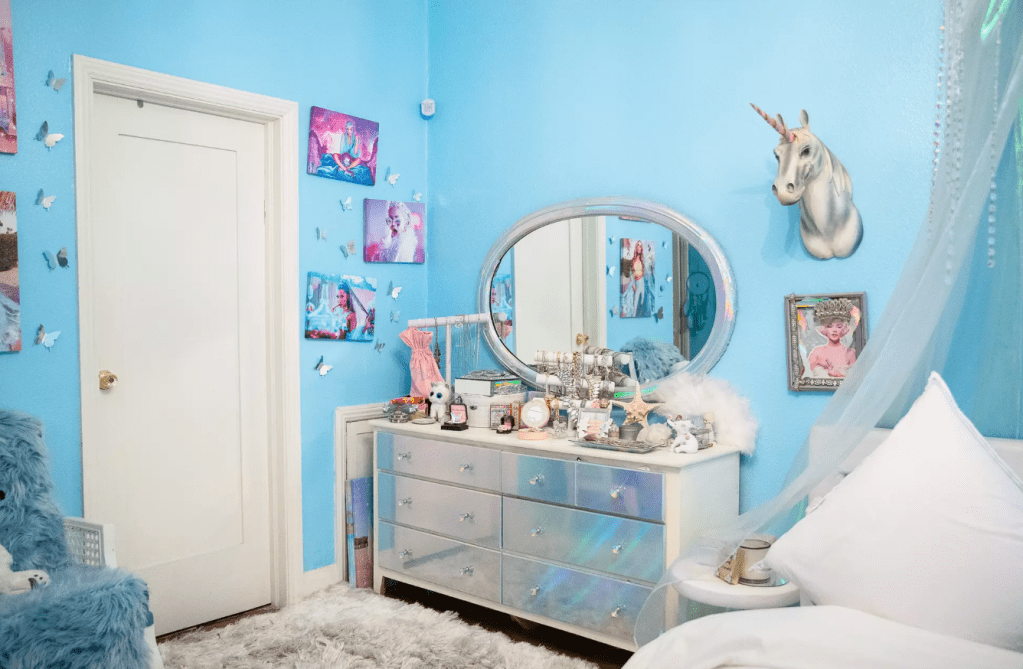
Use their style as a starting point. What made these looks unforgettable wasn’t just the clothes—it was the confidence behind them. Using tools like Pinterest boards can really help you shape how you want to incorporate a Y2K look into your everyday style. An example of how this resurgence has happened in real time, we have the up and coming fashion brand Sparkl Fairy Couture making waves by Gabi Iwalani Hall. Her designs have been worn by the likes of Megan Fox. Gabi’s designs have also trickled into interior design, and she offers a rentable space (like the bedroom below) for photoshoots in LA called “Sparkl Fairy Palace,” which you can book through Peerspace.


🍭 Where to Shop the New-Y2K Look

Thrift Stores & Depop: For true vintage finds.

Heaven by Marc Jacobs: A Gen Z-fueled nod to 2000s chaos with structure.

Urban Outfitters & ASOS: They’re masters of the trend-forward twist.

Amazon & Etsy: Great for accessories like butterfly clips, charm necklaces, or rhinestone sunglasses.


✨ Make It Yours: Adding a Personal Twist

Fashion is always more beautiful when it reflects you. To keep Y2K fresh and not costume-like:

  • Mix in antique or heirloom jewelry for a timeless contrast
  • Add soft feminine details like lace trims or satin bows
  • Stick to a cohesive color palette (monochrome pinks, neutrals, or pastels)
  • Don’t be afraid to reinterpret rather than replicate

Sacred Softness: Feminine Energy as Resistance

Why emotion and gentleness are radical in a world obsessed with control

There’s a quiet revolution happening—not with fists raised or voices shouting, but with soft hands and open hearts. It’s the kind of resistance that doesn’t demand attention but changes everything. It’s the revolution of sacred softness.

In a culture that prizes productivity over presence, sarcasm over sincerity, and hustle over healing, choosing to lead with your femininity—your intuitive, emotional, gentlest self—is a bold act of rebellion. This is more than an aesthetic (though yes, you can wear plenty of blush and lace while doing it). It’s about reclaiming the divine power that comes from within when you choose tenderness in a world hardened by fear.

💗 Softness is not weakness—it’s wisdom.

Our society teaches us that strength looks like armor; that to be taken seriously, you must dull your sparkle, shrink your feelings, and “keep it together.” But sacred femininity teaches something else: vulnerability is strength, intuition is intelligence, and grace is power. The Blessed Virgin Mary, as a symbol, didn’t achieve power through force—she changed the world through her devotion and sacred presence. That is holy softness. I like to think about how the water eroding a rock is more powerful than the rock itself, and it’s the softness of the water’s movement which does this.

🌙 Emotionality is sacred technology.

Your emotions aren’t flaws to fix. They are signals—divine information flowing through your spirit. In embracing emotional depth, we tune into truth beyond logic. We begin to trust that crying can be cleansing, rest is productive, and saying “I feel…” is just as important as “I think…”

This is spiritual intelligence. It’s what guides you back to what’s real and aligned. In a world that glorifies numbness, to feel is truly a sacred act.

🕊️ Grace is a spiritual strength.

When you choose grace over gossip, patience over proving, or kindness over control, you are creating space for love as a way of being. Grace naturally softens others. It creates sanctuary. And in today’s world—where everyone is fighting to be heard—offering a pause or a gentle look is resistance.

Grace doesn’t mean you let yourself be walked over. It means you know your worth so deeply that you don’t need to demand it. Your presence, your peace, your elegance—these things do the talking for you.

🌹 The Rosy Rebellion

Sacred softness isn’t passive—it’s powerful. It’s what fuels the healer, the artist, the lover, the mystic. It’s for the women in vintage slips who discover their sacred perfume and who smile gently while knowing exactly what they’re here to do.

To be soft is to be receptive. To be receptive is to be radically open to divine wisdom, beauty, and change. That’s not small. That’s sacred. Being soft, and through that process, building resilience, is our best hope for the future.

Put on the lace. Feel the feelings. Say a prayer. Slow down. In doing so, you’re not falling behind—you’re changing the frequency of the world.

10 Vintage Beauty Secrets That Still Work Today

As International Women’s Day approaches (IWD on March 8), I find myself reflecting on the powerful influence women’s beauty secrets have had throughout history. While beauty routines have evolved over the years, many timeless vintage beauty rituals continue to play a significant role in modern skincare and beauty practices. From soothing cold creams to natural remedies that have been passed down through generations, these tried-and-true methods are as effective today as they were decades ago. Ready to channel some retro beauty magic? Here are 10 vintage beauty secrets that remain relevant and effective in today’s world.


1. Cold Cream for Clean, Hydrated Skin

Cold cream has been a staple in beauty routines since the 19th century, and for good reason. This thick, emollient-rich cream is designed to cleanse, hydrate, and soothe skin, all in one step. Cold cream is perfect for removing makeup while nourishing your skin, making it a two-in-one product that never goes out of style.

💄 Tip: Apply cold cream to dry skin in gentle circular motions, then remove with a warm washcloth to reveal clean, glowing skin.


2. Silk Pillowcases for Healthy Skin and Hair

Before the rise of modern-day beauty tools and products, women turned to silk pillowcases to protect their skin and hair from damage while they slept. Silk is naturally hypoallergenic, reduces friction, and helps prevent hair breakage and frizz. The smooth surface of silk also prevents your skin from creasing, reducing the likelihood of sleep lines or wrinkles over time.

💄 Tip: Swap out your cotton pillowcases for silk to wake up with smoother hair and skin.


3. Rose Water for Toning and Refreshing

Rose water has been used for centuries in skincare for its calming and hydrating properties. Known for its gentle astringent properties, rose water helps tone the skin while providing a boost of hydration. It’s perfect for refreshing your face throughout the day or as a soothing final step in your skincare routine.

💄 Tip: Use rose water as a natural toner after cleansing, or spray it over your face for a quick pick-me-up.


4. Honey for Soft, Glowing Skin

In ancient beauty practices, honey was revered for its antibacterial and moisturizing properties. Honey helps to lock in moisture, giving your skin a soft, dewy glow. Its antibacterial properties also make it a fantastic ingredient for acne-prone skin, helping to reduce breakouts and inflammation.

💄 Tip: Apply honey as a mask once a week to nourish your skin, or dab a little on blemishes to help heal them naturally.


5. Olive Oil for Moisturizing and Healing

Olive oil has long been used as a natural moisturizer and treatment for dry, irritated skin. Packed with antioxidants and essential fatty acids, it helps to hydrate and repair the skin, making it a favorite in Mediterranean beauty routines. Olive oil can also be used to nourish dry hair, cuticles, and even lips.

💄 Tip: Massage olive oil into dry skin areas like elbows or knees for extra moisture, or use it as a hair treatment before washing to combat dryness.


6. Apple Cider Vinegar for Balancing Skin’s pH

Apple cider vinegar (ACV) has been used for centuries as a natural remedy for a variety of beauty concerns. Its acidic properties help balance the skin’s pH and promote clearer, brighter skin. When diluted, ACV can work as an effective toner, helping to fight acne and reduce inflammation.

💄 Tip: Mix equal parts apple cider vinegar and water, then use a cotton pad to apply it as a toner. Avoid using it undiluted, as it can be too harsh on your skin.


7. Jojoba Oil for Nourishing Lashes and Hair

Jojoba oil, derived from the seeds of the jojoba plant, has been used for centuries as a natural remedy for hair and skin care. Its composition closely resembles the skin’s natural oils, making it perfect for hydrating and nourishing both the skin and hair. Jojoba oil helps promote hair growth, moisturizes dry skin, and can even help balance oil production.

💄 Tip: Apply jojoba oil to your lashes and eyebrows at night to encourage growth and strength, or use it as a lightweight moisturizer for your face and scalp.


8. Lemon for Brightening and Exfoliating

Lemon has long been known for its brightening properties, thanks to its high vitamin C content. Used as a natural exfoliator, lemon helps to remove dead skin cells and brighten the complexion, leaving skin with a radiant glow. Its astringent properties also help tone the skin and reduce excess oil.

💄 Tip: Mix lemon juice with honey for a brightening face mask, or apply a few drops directly to dark spots to help fade them over time.


9. Shea Butter for Deep Hydration and Skin Healing

Shea butter has been used for centuries in African beauty traditions and is prized for its deeply moisturizing and healing properties. Rich in vitamins A and E, shea butter helps to nourish dry skin, soothe irritation, and promote elasticity. It’s perfect for healing sunburns, reducing stretch marks, and moisturizing the skin without clogging pores.

💄 Tip: Apply shea butter to dry, rough patches like elbows and knees, or use it as an overnight face mask to deeply hydrate and rejuvenate your skin.


10. Almond Oil for Softening and Anti-Aging

Almond oil has been a beauty secret for centuries, known for its ability to soften and hydrate the skin while combating the signs of aging. Rich in vitamins A and E, almond oil helps to nourish the skin, reduce dark circles, and improve elasticity. It’s an excellent choice for sensitive skin, offering gentle yet effective hydration.

💄 Tip: Use almond oil as an under-eye treatment to reduce puffiness and dark circles, or massage it into your face for a natural glow.


Timeless Beauty Secrets

While trends come and go, these vintage beauty secrets have stood the test of time for a reason: they work. Whether you’re looking for natural skincare remedies or tips to maintain healthy, glowing skin, these tried-and-true methods have proven effective for generations. So why not bring a little vintage magic back into your beauty routine and experience the timeless benefits for yourself?

The Power of Pink

The Color Pink: From Femininity to Power and Rebellion

Pink has long been associated with femininity, but its journey from a “soft” color to a bold symbol of power, defiance, and self-expression is one worth exploring. Over the centuries, pink has evolved from being a status symbol to a gendered shade, a fashion statement, and even a political tool. It’s one where we can explore how gender affiliation is not necessary and how the power of a color can enhance and strengthen both genders, and also push us to explore ideas around femininity and masculinity.


1. Pink as a Symbol of Prestige in History

Surprisingly, pink was not always tied to femininity. In the 18th century, European aristocrats—both men and women—wore pink as a sign of wealth and status. The color was seen as luxurious, with men of the French court (including King Louis XV) favoring pink suits adorned with embroidery. During this time, pink was not considered “girly” but rather elegant and sophisticated!


2. The 20th Century: Pink Becomes Feminine

The shift towards pink as a “women’s color” began in the early 20th century. Before that, it was actually seen as a strong color suitable for boys, while blue was considered more delicate and suited for girls. However, marketing and societal shifts in the 1940s and 1950s (particularly after World War II) reinforced pink as a feminine color.

  • Hollywood & Fashion Influence: Marilyn Monroe’s famous pink dress in Gentlemen Prefer Blondes (1953) solidified pink as a glamorous and ultra-feminine hue. The rise of pink in fashion, from Dior’s “New Look” to Barbie’s introduction in 1959, further cemented the association with womanhood.
  • The ‘Pinkification’ of Girls’ Products: In the mid-to-late 20th century, toy companies and advertisers aggressively pushed pink for girls’ products, reinforcing gender norms that still exist today, and can be analyzed even further. As much as we can create and construct a narrative, we can also deconstruct the narrative.

3. Pink as Rebellion & Strength

By the late 20th century, pink was being reclaimed as a color of strength rather than just softness.

  • The Power Suit: In the 1980s, pink power suits became a way for women to embrace femininity while asserting dominance in male-dominated industries.
  • Breast Cancer Awareness: The pink ribbon, introduced in the 1990s, turned the color into a symbol of resilience and solidarity in the fight against breast cancer.
  • Punk & Protest: The riot grrrl movement of the ’90s and artists like Madonna used pink in a rebellious, almost ironically—showing that femininity could be both powerful and defiant.

4. Modern Day: Pink as a Political & Cultural Statement

Today, pink has evolved into a symbol of empowerment, breaking free from its once-restrictive associations.

  • The 2017 Women’s March: Pink knitted hats become a global symbol of feminism and resistance.
  • Pink in High Fashion: Designers like Valentino and Jacquemus use bold pinks to celebrate femininity with strength rather than fragility.
  • Millennial Pink & Gender Fluidity: The rise of “millennial pink” (a muted, almost neutral shade of pink) in the 2010s marked the shift of pink being more inclusive—moving beyond gender norms and becoming a universal aesthetic and one that was especially utilized by Glossier.

Pink as a Color of Strength

Pink is no longer just the color of dolls and princess dresses—it’s a color of revolution, resilience, and self-expression. Whether worn in protest, in fashion, or as a personal statement, pink has transcended outdated gender stereotypes and become a powerful shade of confidence, defiance, and identity.


How to Wear Pink with Power & Confidence

a) The Pink Power Suit

Channel your inner boss with a structured pink suit. From soft blush tones to hot pinks, the right shade can make a statement while remaining sophisticated. Pair it with neutral accessories or go all out with monochrome styling for a striking effect.

🩷 Style Tip: Opt for tailored cuts and structured fabrics to maintain an air of authority while embracing the playful nature of pink.

b) Pink in Streetwear & Casual Looks

For a more laid-back approach, incorporate pink into everyday wear through oversized blazers, statement sneakers, or a pop of color in a graphic tee. Pink hoodies and joggers, especially in deeper shades like fuchsia or dusty rose, blend femininity with urban edge.

🩷 Style Tip: Try pairing a pastel pink top with leather pants or denim to balance softness with edginess.

c) Pink Accessories for a Subtle Touch

Not ready to fully embrace head-to-toe pink? Accessories like a bold pink handbag, rose-tinted sunglasses, or a statement belt can add a touch of empowerment without overwhelming your outfit.

🩷 Style Tip: A pink handbag or heels can instantly elevate an all-black outfit, adding a striking yet sophisticated contrast.


Beauty: The Power of Pink Makeup

Pink isn’t just for clothing—beauty trends continue to push pink as a symbol of both femininity and bold self-expression.

a) The Bold Red-Pink Lipstick

Red lipstick has long been seen as a power move, but pink variations (like deep raspberry or electric fuchsia) offer an equally daring alternative. A bold pink lip can be just as commanding as a classic red, while still feeling fresh and modern.

🩷 Beauty Tip: Try a matte hot pink lipstick for a striking statement, or a glossy rose shade for a softer, elegant touch.

b) Blush: The Ultimate Confidence Booster

A well-placed pink blush can instantly lift the face and add warmth. Rosy and berry-toned blushes create a fresh, youthful glow while emphasizing natural beauty.

🩷 Beauty Tip: Apply blush higher on the cheekbones for a sculpted, lifted look rather than just on the apples of the cheeks.

c) Pink Eyeshadow for Playful or Edgy Looks

Pink eyeshadow may seem intimidating, but it can be effortlessly chic when done right. Soft pinks offer a romantic vibe, while neon pinks bring a fearless, high-fashion edge.

🩷 Beauty Tip: For a subtle approach, blend a dusty rose shade into the crease. For a bold statement, go for a monochromatic pink eye with shimmering finishes.


Pink as a Lifestyle Choice

Beyond fashion and beauty, pink has also become a lifestyle aesthetic—one that represents confidence, empowerment, and self-expression. From pink-themed home decor to stationary and branding, the color has cemented itself as a force beyond trends.

🩷 Incorporate Pink into Your Life:

  • A pink journal for manifesting powerful goals
  • Rosy-hued candles or decor to create a calming yet inspiring atmosphere
  • Pink-tinted sunglasses for a “rose-colored” outlook on life (literally!)

Embracing the Power of Pink

Pink is no longer just a color for princesses and dolls—it is a statement of power, rebellion, and individuality. Whether through a striking fashion moment, a bold lip color, or a lifestyle choice, pink allows you to embrace both your femininity and your strength, proving that the two are not only compatible but beautifully intertwined.

So go ahead—wear that pink 🩷

Valentine’s Day Cowgirl Aesthetic

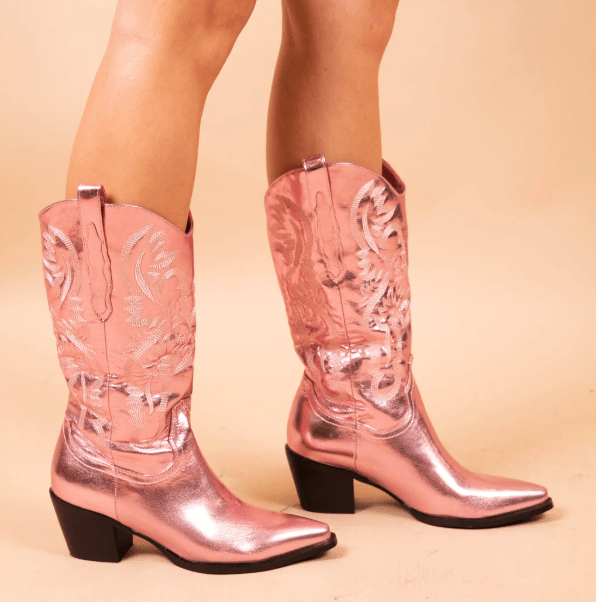
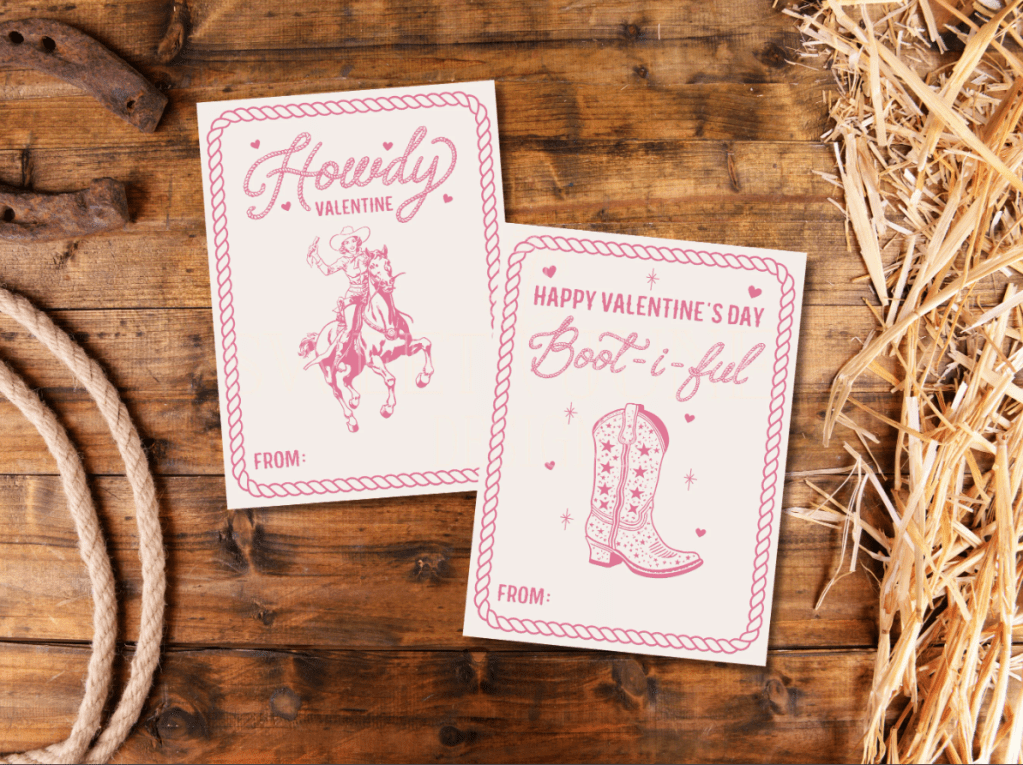
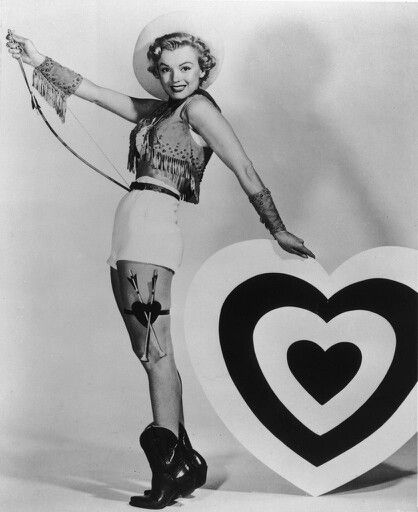
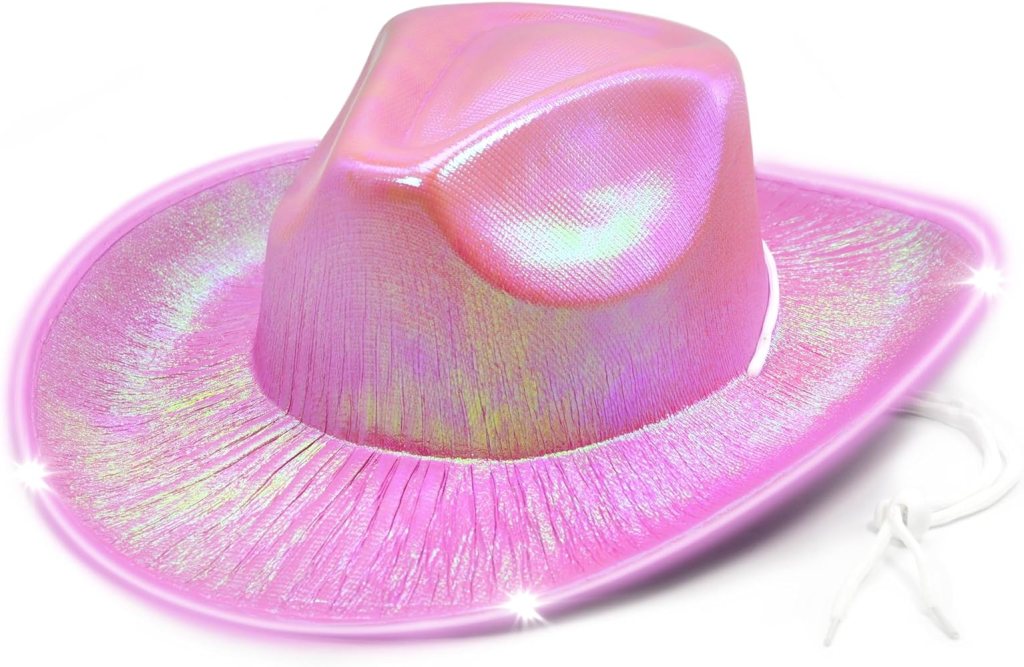
The marketing aesthetic of the Cowgirl Valentine this year is one that embodies both feminine style, and a new, future forward idea around cowgirl style. As people tap into what their connection to “country” might be in this current historical moment (and in a much larger schematic now – whether that be from a Grammy award to a way of life), there is definitely room for the style to embolden girls and young women to be their own cowgirl valentine. The costume of the “Space Cowgirl” has long been one that is fascinating to me. It is the idea that girls can bring forth retro style with a futuristic idea of femininity where the past meets the future. It likely originated from the Sci-Fi film genre of the Space Western.

The Space Western film genre touches on tropes of how women are “out of this world” – which can be perceived in empowering ways – and there are elements throughout the Space Western that incorporates how women are perceived, unfortunately, in classically misogynist ways at times, and other times in forward-focused inclusionary ways. I think merging together the tropes of the Sci-Fi Space Western films, obvious examples such as Star Wars to more niche ones like the 1956 film Forbidden Planet, to include these feminist elements with the main characters is especially fascinating. I remember fondly watching the movie Zenon: Girl of the 21st Century in 1999. I know that film was an instant Disney Channel classic, yet it’s rarely mentioned in popular culture now. I hope the messaging of belonging and kindness as a global attitude for the 21st century is one that continues to be elevated. Ideally, in ways that are truly focused on embracing themes of women supporting women, and men being allies in supporting women and ensuring the holistic nature of this occurring.

While we know Valentine’s Day is a holiday geared specifically towards embracing our loved ones and appreciating them in individual ways, there is a broader marketing opportunity for positive and inspiring messaging in merchandise and marketing that will occur, which is undoubtedly a huge component of how we perceive what is “trending” during a particular year. This year, I hope the Cowgirl Valentine is one that makes us continue moving forward with values of women embracing their feminine style, whilst being mindful of a broader messaging that ties together themes with identifiers of country, past and present.

Happy Valentine’s Day!

Reflections on Tolle, Jung, and Individuality

The Art of C.G. Jung

Over the past couple of years, I have been committed to learning about ideas which focus on cultivating and enriching spiritual enlightenment and liberation for a health focused and purpose-led life (perhaps this came to the forefront of my mind because of the pandemic causing existential considerations of what matters to people and systems).  For me, this exploration came in the serendipitous encounter of Eckhart Tolle’s book A New Earth in my neighborhood’s Little Free Library book stand.  I went on to read his first bestseller The Power of Now, which ultimately led me into reading and blogging about an entire spectrum of New Age writers including Louise Hay, Wayne Dyer, Masaru Emoto, and then Deepak Chopra and my journey into studying Ayurveda as in depth as possible as a novice to a complex topic that includes thousands of years of tradition from India. 

Overall, many of these New Age writers had me in an intellectual grip without a doubt…I felt a sort of spiritual transformation reading these books, which is not a small thing to say. I began meditating quite often and learned different ways of meditating. I think meditation is a tool to unlock subconscious thoughts and believe it’s a tool that should be taught earlier in our lives than later. It affected my approach to how I thought about what matters – how we approach each and every day and how our attitudes shape our micro and macro experience in the world is what defines our human experience.  However, this is not to say that it transformed my personality.  If anything, it affirmed what I already had set forth with creating: a world of rosiness and softness as a vehicle for navigating complex information.  My New Age studies became an opportunity to journey into understanding the “self” vs. the “Self.”  The work of egoic detachment never stops, and in my opinion, is a rather fruitless endeavor over time.  From the ideas Eckhart Tolle presents around “presence” and “nowness” as the only state of our lives to be concerned with, I have found there to be some essential faults with his teachings when put into practice.  Ultimately, those lived experiences led me to two truths that I can separate and examine: The first truth is that there is a universal oneness of source energy we are all a part of. This is technically separate from ideological concepts around God, but can be merged together with God dependent on your cultural ideological conception of God. I am a Roman Catholic and have found inner peace through my Christocentric journey. I also support the peaceful existence of alternative religious doctrine which adheres to a peaceful reciprocity of this goodwill. In my opinion, we are all part of a “source energy” that we all collectively belong to and theology complements that journey to optimal health and spiritual wellbeing. The source energy that brings us to this life also takes us from this life (it is up to you how you comprehend the idea of God as an entity separate or part of oneself, we are bonded through a source energy in any event).

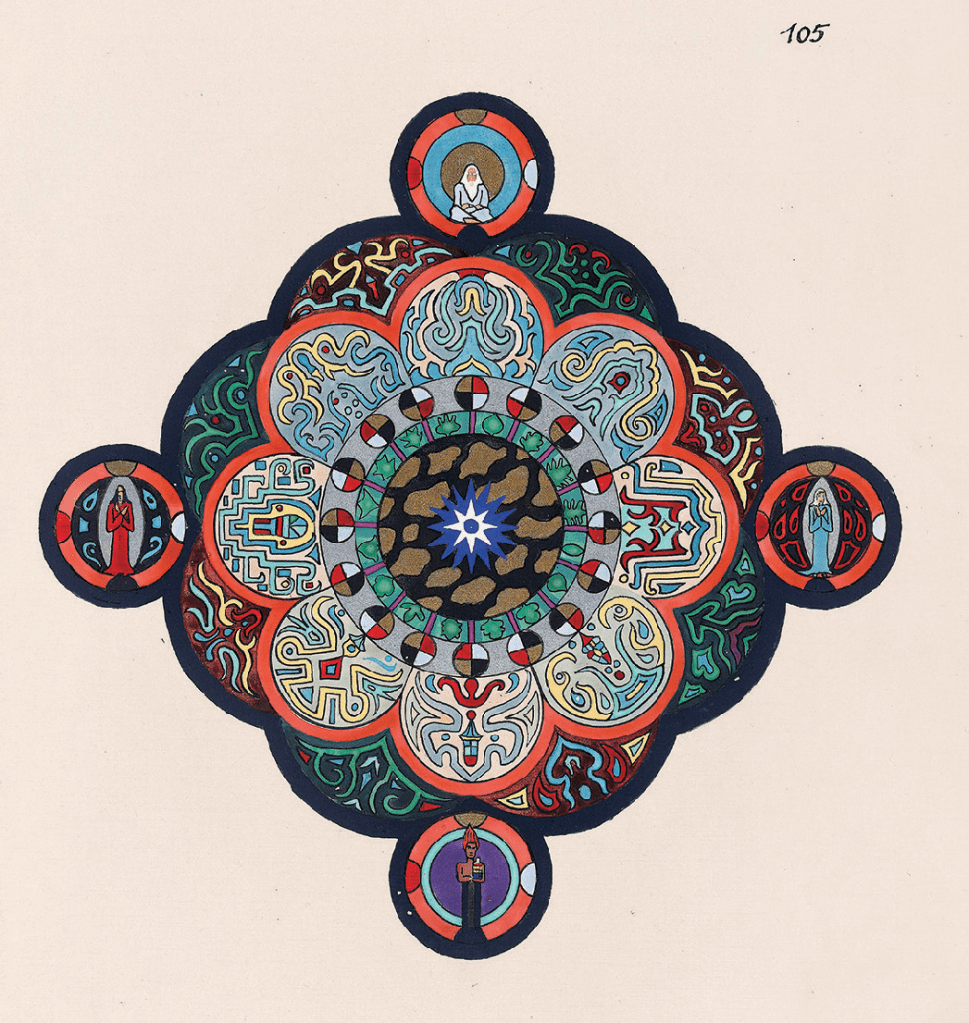
    The second truth we can explore is that our experiences shape us as individuals: culture, ideology, social norms and we should do our best to develop our individuality. These things do shape us into who we are – it’s too much to ask of ourselves to abandon all of what comprises us as individuals to focus on awakening as a collective as Eckhart Tolle asserts through his teachings.  The real importance of individuation necessitates physical survival – the ego survives for a reason.  We are composed of all those “things” (gender, culture, religion) which Tolle tells us to negate ourselves from to have spiritual enlightenment as a collective.  This is truly nonsense in practice. His discussion points around disconnection from the “thinking mind” and ego become too abstract to truly find purposeful action within.  We all live and navigate within highly complex systems. Tolle’s ideas around liberation from the ego are too disconnected from real life and how societies operate. As a result of this deep reflection for myself, I have begun to embrace and study Carl Jung’s interpretations around the “shadow self” and how doing “shadow work” is how one can truly find their life’s purpose.  His connection to mandalas and Eastern Thought are especially important tools for these reflections.  

    Jung connected to ideas from Buddhism and believed in respecting and including the whole of an individual’s experience, including their “shadow” aspects.  In my opinion, the Jungian shadow is what will unlock liberation and maintain individuality for each of us.  In Eckhart Tolle’s view, the meaning of life is through a negation of the ego (individualism) and attaching oneself to a universal collective source energy as being a form of endless joy… his ideas around separation from the ego brings the nirvana of universal source energy as our entrance into conceiving infinity (given the science of black holes in the universe – infinity definitely exists). However, just because infinity exists does not mean humanity survives through a furthered attachment to universal source energy, nor do cultures survive this way.  Humanity survives through connection between individuals who create life and further generate individuality this way.  Individuation is our liberation. The ego is too hard to detach from as human beings and there are biological reasons for this.  The ego will not be the demise of humanity – the ego will enable our survival.  Tolle states how collective consciousness is part of the next phase of human evolution.  I highly doubt we will have the ability to culturally dissociate that much, especially during a time in the world where cultural separations became glaringly apparent.  I do connect to the ideas Tolle presents related to the importance of our present moment and do think he presents tools which empower people to overcome challenges and hardships through a focus on what you can do to take positive action in the moment. Beyond that, I see individuality and connections to other individuals as the answer to our liberation and not collective consciousness as liberation.

    I believe that the real inner truth we can find within ourselves is that humanity will survive longer when we focus on ourselves as individuals. We find peace in the boundary separations of our individuation by respecting individuality as our core truth.